
You’re still holding your phone with the class teacher’s message open. “Bright child, but slow to catch up… you may want to get this looked at.” Or maybe it was said gently across a table at the parent-teacher meeting, the kind of sentence that keeps replaying on your drive home.
The first question every parent asks in that moment is really three questions wearing one face: Is this just a phase? Is this ADHD? Or is this a learning disability? And underneath all three is the one that matters most — what do I do right now?
Here’s a clear, doctor’s-eye way to think it through.
First: most struggling children are just… struggling. That’s not automatically a red flag.
Children settle into a new class, a new syllabus, or a new teacher’s style at very different speeds. A child who takes a few weeks to find their footing after a grade change, a school switch, or even a long holiday is usually showing normal variation, not a disorder.
Signs that point toward “give it more time” rather than “get this evaluated”:
- The difficulty is recent and tied to a clear change (new school, new subject, new teacher, family disruption)
- It’s improving gradually, even if slowly, over 4–6 weeks
- It shows up in one subject or one skill, not as a broader pattern
- The child isn’t showing distress, avoidance, or a drop in confidence about school in general
The red flags worth paying attention to
Specific Learning Disability (SLD) — which includes dyslexia (reading), dysgraphia (writing), and dyscalculia (mathematics) — and ADHD look different from each other, but both get mistaken for “not trying hard enough” more often than they should.
Possible signs of a Specific Learning Disability
- Reading noticeably behind grade level — omitting, substituting, or guessing words rather than reading them
- Persistent difficulty with letter/number reversals (b/d, 15/51) beyond the age where that’s typical
- A big gap between what the child can say out loud and what they can write down
- Trouble with spelling that doesn’t improve with normal practice
- Difficulty with basic number sense or math facts that peers have already mastered
- Copying from the board slowly or inaccurately, disorganized written work
Possible signs of ADHD
- Short attention span across settings — not just in the subject they dislike
- Difficulty following multi-step instructions
- Losing track of belongings, assignments, or deadlines repeatedly
- Restlessness, difficulty staying seated, or impulsive responses that go beyond classroom norms for their age
- These patterns showing up at home too, not only at school
A key clinical detail parents often don’t know: these two conditions frequently co-exist. A child can have both, or have ADHD symptoms that are actually secondary to the frustration of an undiagnosed SLD — or vice versa. This is exactly why a proper evaluation, not a guess from a single report card, is what actually sorts it out.
Why “lazy” and “careless” are the two most misleading words in a report card
Here’s something worth sitting with: a child with normal — sometimes above-average — intelligence, who struggles specifically with reading, writing, or maths, will often look “careless” or “not putting in effort” to an untrained eye. That’s because everything else about them looks fine. They can hold a conversation, understand concepts, even excel at sport or art. So when the specific skill breaks down, the easiest explanation adults reach for is character, not neurology.
This mislabeling has a cost. A child repeatedly called lazy or careless doesn’t just miss out on the right help — they start to believe it about themselves. Self-esteem and school anxiety are often what actually bring these children to a doctor’s office, well after the academic struggle began.
Common myths worth correcting early
“He’ll grow out of it.” Some settling-in struggles do resolve on their own. But a genuine Specific Learning Disability doesn’t go away with time — it’s a lifelong difference in how the brain processes certain kinds of information. What changes with the right support isn’t the underlying wiring; it’s the child’s ability to work with it. Waiting rarely helps, and it often costs a child years of avoidable struggle and knocked confidence.
“A learning disability means low intelligence.” This is one of the most persistent — and most damaging — misunderstandings. By definition, SLD is diagnosed only when it is unexpected given a child’s overall intelligence. These are children whose academic performance doesn’t match their evident ability, not children who lack ability.
“ADHD is just bad parenting, or too much screen time.” It isn’t. ADHD is a neurodevelopmental condition, not a discipline outcome. That said, it’s fair to note that excess, poorly-structured screen time can genuinely worsen attention difficulties in any child, including one with ADHD — so managing screen time is a reasonable, useful step, just not a substitute for evaluation if the pattern is significant.
“Getting a diagnosis will label my child forever.” In practice, it tends to be the absence of a diagnosis that leaves a child stuck with an informal, harsher label — “lazy,” “slow,” “not serious about studies” — that follows them through school without ever being questioned. A formal evaluation, done well, replaces a vague, blaming label with a specific, actionable understanding, plus a set of concessions and strategies the child is entitled to.
What a formal evaluation actually involves
This is usually the part parents know least about, so here’s the real sequence:
- Pediatrician / developmental pediatrician / pediatric neurologist first. The doctor takes a detailed history, examines the child, and — importantly — rules out other explanations: vision or hearing problems, other neurological conditions, or general health issues that can also affect school performance.
- Referral to a clinical psychologist for formal testing, if the doctor’s assessment supports it. This typically includes an IQ/cognitive ability test (to confirm the child’s intelligence is in the average range or above — a core requirement for an SLD diagnosis) and specific psychoeducational tests of reading, writing, mathematics, and processing skills. In India, tools such as the NIMHANS Index (developed specifically for Indian children, available in English, Hindi, and Kannada) are commonly used alongside others suited to the child’s age and language background.
- A detailed report, which goes back to the pediatrician and becomes the basis for what happens next — whether that’s a remedial educator, an occupational therapist (for handwriting or coordination difficulties), counselling, or a combination.
- Ongoing monitoring, not a one-time verdict. A good evaluation comes with a plan and expected milestones, and the family, school, and specialists track progress against it together.
On cost and time: these vary by city, clinic, and which tests are used, so I’d rather not quote you a number that goes stale — [insert your practice’s current consultation and typical assessment cost/timeline here]. As a general shape, expect the psychologist’s testing to take a few sessions rather than one, with the full picture — history, testing, and report — typically taking a few weeks to complete.
The school’s role vs. the specialist’s role
Parents sometimes assume the school should have caught this, or conversely, that the school should be the one to “fix” it. Neither is quite right — each has a distinct job:
What the school can reasonably do
- Flag concerns early, based on classroom observation (many schools use structured screening checklists for exactly this)
- Make classroom-level adjustments once a diagnosis is in hand — preferred seating, extra time, alternate ways to demonstrate understanding
- Apply for formal examination concessions the child may be entitled to (extra time, use of a scribe, exemption from penalizing spelling/grammar errors in relevant subjects) — availability of these has expanded under India’s education policy framework in recent years, though exact provisions can vary by state and board, so it’s worth checking current rules with the specific school/board.
What only a specialist evaluation can do
- Confirm or rule out SLD/ADHD with standardized tools — a teacher’s or parent’s impression, however experienced, isn’t a diagnosis
- Identify exactly which skills are affected and design an individualized remedial plan around them
- Catch co-occurring conditions (ADHD, coordination difficulties, anxiety) that a purely academic lens would miss
The two work best in partnership — the school flags and accommodates, the specialist diagnoses and treats.
The take-home message
Early identification changes outcomes far more than late identification does. But that doesn’t mean every struggling child needs a label rushed onto them. The actual goal of an evaluation is to rule in or rule out — to replace a worried guess with a clear answer, one way or the other.
If you’ve just come out of a parent-teacher meeting and you’re turning this over in your head tonight: that instinct to check is the right one. The next right step isn’t panic, and it isn’t “wait and watch” indefinitely — it’s a proper evaluation, so you know exactly what you’re dealing with, and exactly what to do about it.
Save the companion red-flags checklist so you have it on hand next time you’re comparing notes with a teacher — and if two or more of the patterns above sound familiar, it’s worth booking a consult to have it properly assessed. [Consult booking link]
This article is for general educational purposes and isn’t a substitute for individual medical evaluation.
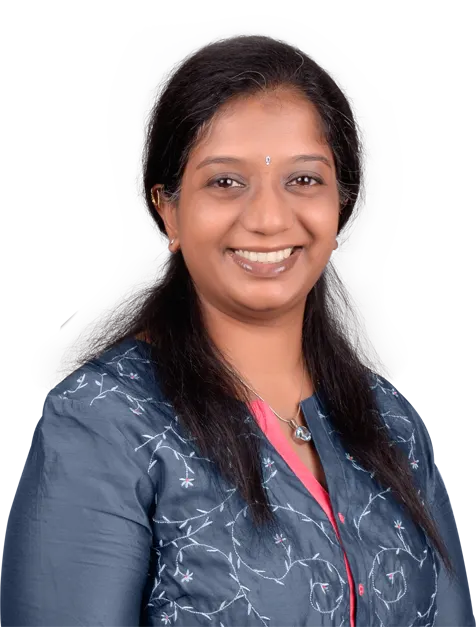
Dr. Gowri Ravi Chinthalapalli is a Developmental Physician & a Family Medicine expert with over 20 years of experience in child development and family medicine. She has treated more than 50,000 patients worldwide. After completing her MBBS from Rajiv Gandhi University of Health Sciences, she pursued MRCGP from the UK and gained wide experience in primary care and emergency medicine. She also holds a Fellowship in Child Development from the Centre for Child Development and Disabilities, Bengaluru. Dr. Gowri currently practices as a Consultant Child Development at the Krishna Institute Of Medical Sciences (KIMS Hospital), Bengaluru and a Family Physician at Canara Diagnostic Centre, Bengaluru. She is passionate about guiding families, supporting children with developmental needs, and providing holistic care.